
In today’s fragmented digital landscape, consumers move fluidly between social media, email, websites, and mobile apps. Because the journey from awareness to conversion is rarely linear, simply having a presence on these platforms is no longer enough. The true differentiator is a seamless and consistent brand experience.
This guide outlines strategies to master multi-channel branding, ensuring your message resonates and your customer experience remains unified across every interaction.
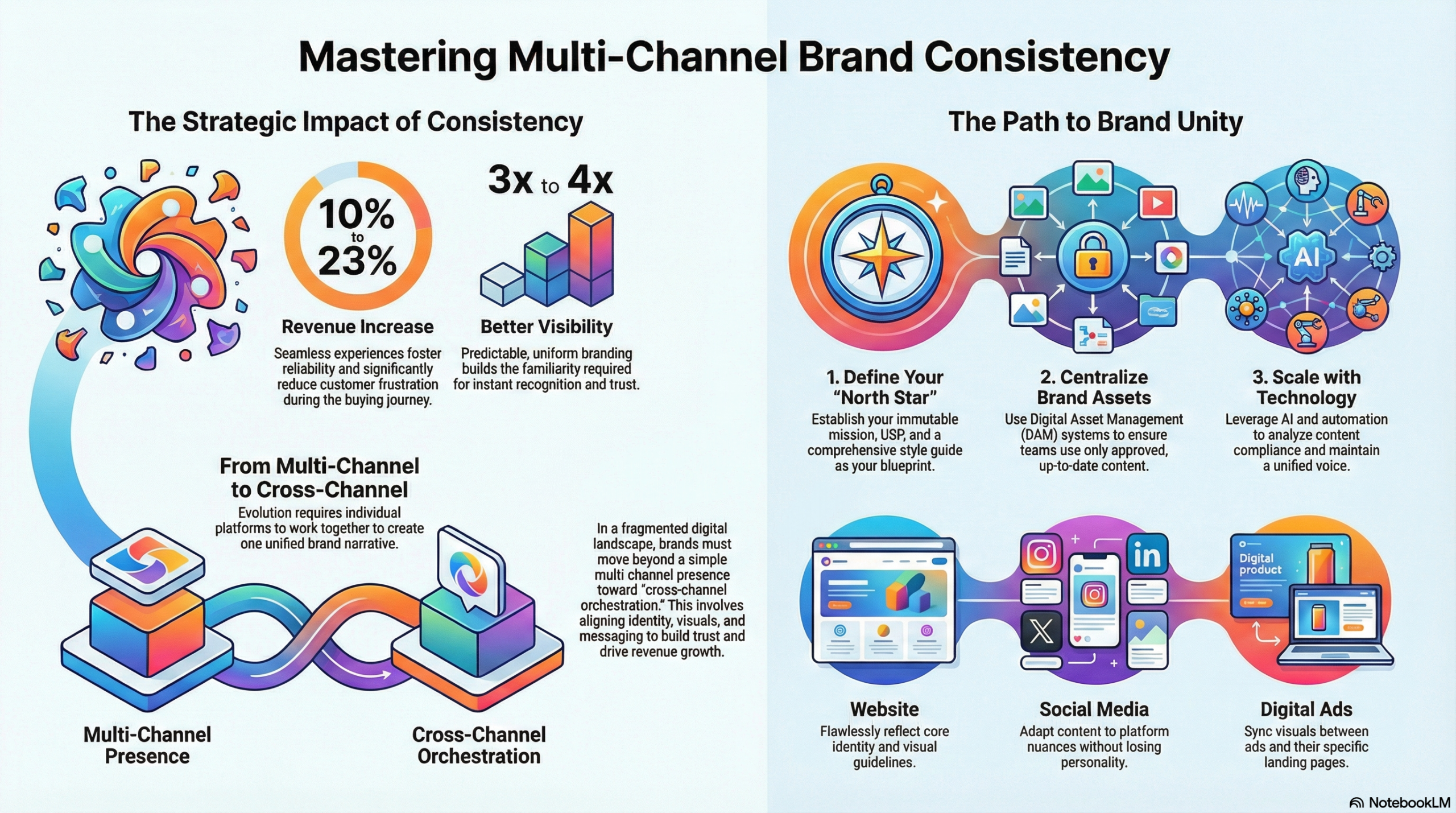
The Strategic Imperative of Consistency
Understanding Multi-Channel vs. Cross-Channel
Multi-channel branding is the presence of a brand across various platforms. However, modern marketing has evolved into cross-channel orchestration, where different channels work together to create a unified narrative. With the global omnichannel retail market reaching billions, every touchpoint—from a Google ad to a blog post—must speak with a singular brand voice.
How Consistency Builds Trust and Equity
Consistency is a strategic choice that directly impacts loyalty. When a brand is predictable, it builds familiarity, which breeds trust.
Visibility: Consistent brands are 3 to 4 times more likely to achieve strong visibility.
Recognition: Uniformity in logos, colors, and tone ensures your brand is instantly recognizable.
Revenue: Seamless experiences can increase revenue by 10% to 23% by fostering reliability and reducing customer frustration.
Building Your Unified Brand Foundation
Before executing a multi-channel strategy, you must establish the "North Star" of your brand identity.
1. Define Your Immutable Core
Identify your mission, vision, and unique selling proposition (USP). These elements are the foundation for every piece of content and customer interaction.
2. Create a Comprehensive Style Guide
A style guide is your blueprint. It should detail:
Visual Guidelines: Color palettes, typography, imagery styles, and iconography.
Brand Voice: The personality of your communication (e.g., authoritative, playful, or sophisticated).
Messaging Framework: Key messages and language to be used across different contexts.
3. Implement Digital Asset Management (DAM)
A DAM system provides a centralized repository for all approved logos, images, and templates. This ensures teams use up-to-date assets and reduces the risk of brand dilution.
Implementing Consistency Across Touchpoints
Once the foundation is set, apply it meticulously across all customer interactions:
| Touchpoint | Focus Area |
| Website | The "Home Base" that must flawlessly reflect the core identity and visual guidelines. |
| Social Media | Adapt content to platform nuances (e.g., LinkedIn vs. Instagram) without losing brand personality. |
| Email Marketing | Maintain a consistent voice in direct communication to reinforce trust. |
| Digital Advertising | Ensure ads and their corresponding landing pages share cohesive visuals and messaging. |
| Customer Service | Support staff should embody brand values in every live chat, email, or call. |
Leveraging Technology for Scalability
Maintaining consistency at scale requires the right tools:
Marketing Automation Platforms (MAPs): Streamline brand-compliant content delivery across multiple channels.
Customer Data Platforms (CDPs): Aggregate data to provide personalized experiences that remain consistent with the brand’s core message.
Artificial Intelligence (AI): Use AI to analyze content for compliance, automate personalization, and predict potential inconsistencies.
Content Governance: Establish clear workflows and approval processes to manage content across teams and agencies.
Auditing, Measuring, and Optimizing
Branding is an ongoing process of refinement.
The Multi-Channel Brand Audit
Regularly review your website, social profiles, and ads. Identify gaps where the tone or visuals might deviate from the style guide.
Key Performance Indicators (KPIs)
Track metrics that reflect brand health, such as:
Brand mentions and sentiment analysis.
Engagement rates across social platforms.
Cross-channel attribution to see which touchpoints drive the most value.
Overcoming Internal Challenges
Internal "silos" are the greatest threat to consistency. To overcome them:
Break Down Silos: Encourage collaboration between marketing, sales, and customer service.
Educate Stakeholders: Ensure every employee understands the brand’s identity and their role in upholding it.
Empower Advocates: Turn staff into brand ambassadors who champion the unified vision.
Final Thought: Mastering multi-channel branding builds a bridge of trust between your business and your audience. By aligning your foundation, technology, and team, you create a brand that is not just seen, but remembered.