
The Complete Guide to Content Repurposing: Unlock More Value from Every Piece
In today's hyper-competitive digital landscape, the pressure to produce a constant stream of fresh, engaging content can feel overwhelming. Businesses and creators alike pour significant time, resources, and creativity into developing insightful blog posts, captivating videos, and in-depth podcasts. Yet, the lifespan of much of this valuable content is often regrettably short, quickly becoming lost in the ever-expanding digital ether. This represents a monumental missed opportunity – a substantial underutilization of hard-earned assets and a drain on marketing budgets. The reality is that most content, if left as a single piece, is a fraction of its potential. The challenge of modern content creation is stark: the demand for constant, relevant output is immense, often stretching teams thin with limited resources and competing priorities. This can create a detrimental cycle where valuable ideas are only showcased once.
However, a powerful strategy exists to break this cycle and maximize your content investment: content repurposing. It’s not just about creating more content; it’s about creating smarter content. This comprehensive guide will equip you with the knowledge and strategies to transform your existing pieces into a dynamic ecosystem of valuable assets, driving engagement, expanding reach, and achieving exceptional ROI. We'll delve into the fundamentals, explore strategic imperatives, uncover practical "how-to" methods, and guide you in building a sustainable repurposing workflow.
The Complete Guide to Content Repurposing: Unlock More Value from Every Piece
In today's hyper-competitive digital landscape, the pressure to produce a constant stream of fresh, engaging content can feel overwhelming. Businesses and creators alike pour significant time, resources, and creativity into developing insightful blog posts, captivating videos, and in-depth podcasts. Yet, the lifespan of much of this valuable content is often regrettably short, quickly becoming lost in the ever-expanding digital ether. This represents a monumental missed opportunity – a substantial underutilization of hard-earned assets and a drain on marketing budgets. The reality is that most content, if left as a single piece, is a fraction of its potential. The challenge of modern content creation is stark: the demand for constant, relevant output is immense, often stretching teams thin with limited resources and competing priorities. This can create a detrimental cycle where valuable ideas are only showcased once.
However, a powerful strategy exists to break this cycle and maximize your content investment: content repurposing. It’s not just about creating more content; it’s about creating smarter content. This comprehensive guide will equip you with the knowledge and strategies to transform your existing pieces into a dynamic ecosystem of valuable assets, driving engagement, expanding reach, and achieving exceptional ROI. We'll delve into the fundamentals, explore strategic imperatives, uncover practical "how-to" methods, and guide you in building a sustainable repurposing workflow.
Understanding Content Repurposing: The Fundamentals
Content repurposing is the strategic art of transforming a single piece of original content into multiple derivative forms. This isn't simply about re-sharing; it's a creative reimagining of your core ideas and information to resonate with different audiences on various platforms and in various formats. Think of it as giving your best ideas a second, third, or even fourth life, ensuring that the effort invested in initial creation yields ongoing returns across your entire content ecosystem. A single, high-quality piece of pillar content can be strategically adapted and disseminated across multiple channels, multiplying its impact and extending its value far beyond its initial publication.
What Exactly is Content Repurposing?

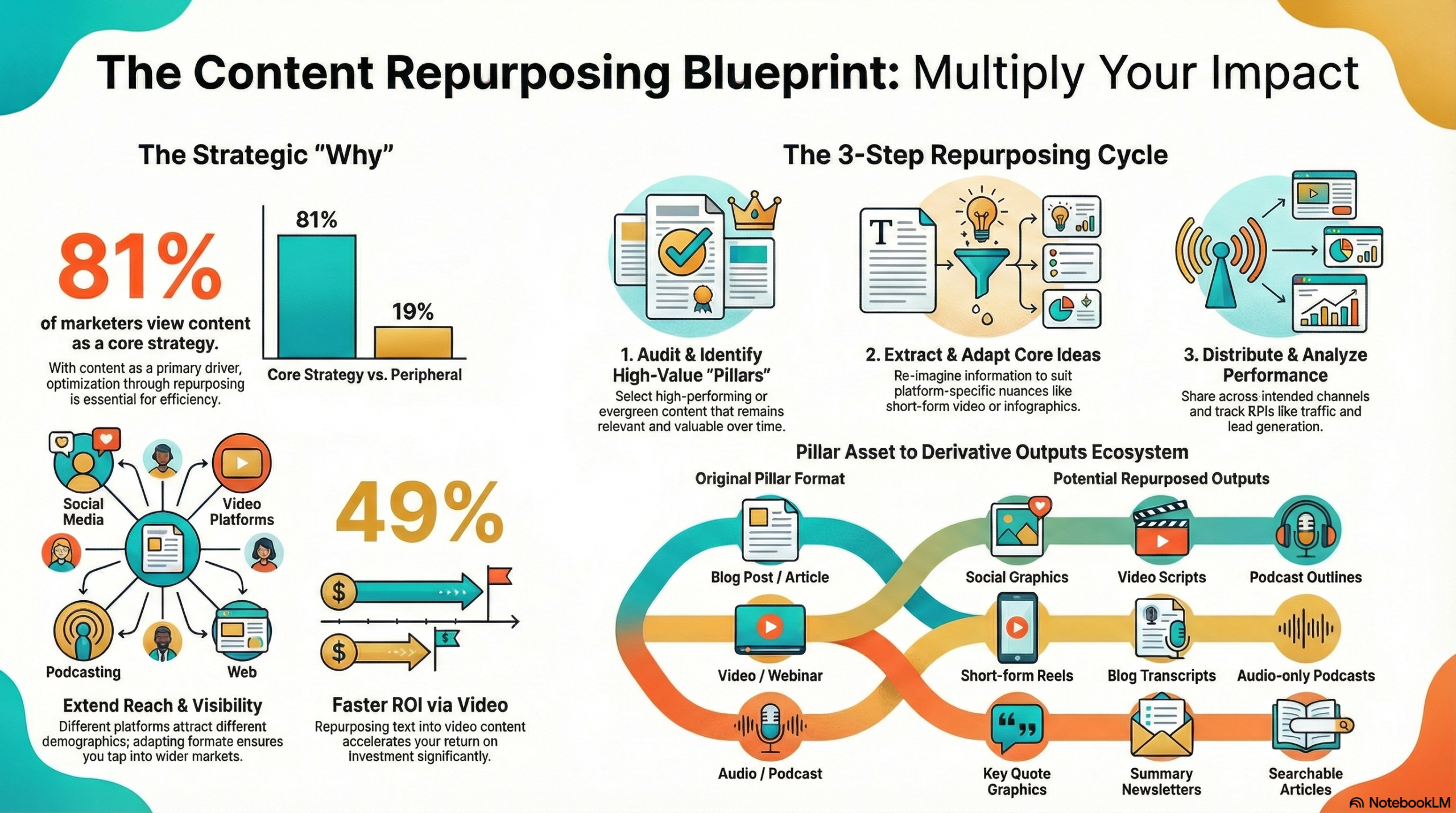
A single piece of pillar content can be strategically transformed into multiple formats to suit different platforms and audiences.
At its core, content repurposing is the strategic repackaging of a single piece of content into multiple different forms. It’s about recognizing that a single topic or idea can be presented in multiple ways to cater to diverse platform preferences and content consumption habits. For instance, a comprehensive blog post can be broken down into a series of social media posts, transformed into a video script, summarized into an infographic, or expanded into a podcast episode. The original topic remains the same, but the format and distribution strategy are tailored to suit new platforms and audience preferences. This practice ensures that the effort invested in the initial creation yields ongoing returns, effectively giving your best ideas a sustained lease of life and a significantly extended presence.
The Undeniable Benefits of Repurposing Your Content
The advantages of a robust repurposing strategy are far-reaching and directly impact your marketing effectiveness and efficiency. A staggering 81% of marketers say content marketing is a core business strategy in 2025 [SQ Magazine, 2025], underscoring the need to optimize this investment. By repurposing your existing content, you can achieve a multitude of benefits:
- Maximize ROI and Drive Exceptional ROI: Every piece of content you create is an investment. Repurposing ensures you get the most mileage out of that investment, significantly reducing the need for constant new creation and leading to exceptional ROI.
- Extend Reach and Visibility to a Wider Audience: Different platforms attract different audiences. Adapting your content to suit these various channels exposes your ideas to a wider demographic and a wider audience, increasing brand awareness and tapping into a huge market.
- Improve SEO and Reach Search Engines Effectively: By distributing your core topic across multiple formats and platforms, you create more opportunities for search engines to discover and rank your content. Each repurposed piece acts as an additional touchpoint for your brand, contributing to overall authority.
- Enhance Brand Consistency: Repurposing ensures a consistent message and brand voice across all your touchpoints, reinforcing brand identity and trust.
- Save Time and Resources: Creating new content from scratch is time-consuming and resource-intensive. Repurposing leverages existing material, freeing up valuable time and budget for other strategic initiatives.
- Deepen Audience Understanding: Tailoring content for different platforms forces you to consider user understanding and consumption habits, leading to more resonant and impactful communication.
- Boost Engagement: Presenting information in various content formats can appeal to different learning styles and preferences, leading to increased engagement rates.
- Accelerate Content Velocity: A well-defined repurposing process allows you to publish content on a regular basis, keeping your audience engaged and your brand top-of-mind.
Repurposing vs. Reposting vs. Syndication: Key Differences
It's crucial to distinguish repurposing from related content strategy practices to fully grasp its unique value:
- Reposting: This involves sharing the exact same piece of content on different platforms without significant modification. While it can increase visibility to a certain extent, it fails to cater to platform-specific nuances or audience preferences, often resulting in a diluted impact.
- Syndication: This is the practice of licensing your content to be published by other platforms or publications, typically for a fee or in exchange for exposure. The content itself usually remains in its original format. While valuable for reach, it doesn't involve transforming the original piece into new content formats.
- Repurposing: This is about creatively transforming your original content into entirely new forms. It’s a creative reimagining of the original ideas and information for a different context, audience, or platform. For example, turning a detailed webinar into a series of social media shorts, an audio file from a podcast, or a blog post into an infographic are all instances of repurposing, offering a new lease of life to the original subject matter.
The Strategic Imperative: Why Repurposing is More Than Just a Tactic
Repurposing content is not an optional add-on; it's a core component of a smart, sustainable content strategy. It ensures that the significant investment made in creation yields maximum returns by extending the reach and impact of every single piece. In today's crowded digital space, relying solely on net-new content is inefficient and unsustainable. A strategic approach to repurposing allows you to maximize your efforts, amplify your message, and build a more robust and resilient content engine that aligns seamlessly with your overarching business goals.
Aligning Your Repurposing Efforts with Business Goals
Every repurposing strategy should be deeply rooted in your overarching business objectives. Are you aiming to increase brand awareness, generate qualified leads, establish thought leadership, improve customer education, or drive conversions? For instance, if lead generation is a primary goal, you might repurpose a detailed blog post into a gated e-book or a webinar registration page. If building community and engagement is key, you might transform video snippets into interactive social media posts and shorts. Understanding your business goals ensures that your repurposing efforts are focused, impactful, and contribute directly to measurable business outcomes. Indeed, 87% of marketers report that content marketing generates demand/leads [Ahrefs, 2025], and repurposing amplifies this generative power by creating more opportunities for audience interaction and conversion.
Understanding Your Audience and Content Consumption Habits
The effectiveness of your repurposed content hinges on deeply understanding how your target audience consumes information across different platforms. Do they prefer short-form video on TikTok and Instagram Reels, in-depth articles on LinkedIn, or audio content via podcasts? A thorough understanding of these habits allows you to tailor your repurposed pieces to resonate best with specific segments of your audience on their preferred channels. For example, 48% of social media marketers share similar or repurposed content across platforms with minor moderations or adaptations [HubSpot, 2023], highlighting the crucial need for platform-specific adjustments. This user understanding is vital for creating content that not only reaches a wider demographic but also genuinely connects with them.
The Content Audit Foundation: Identifying Your Repurposing Goldmine
Before you can effectively repurpose, you need to know what you have. A comprehensive content audit is the foundational step to unlocking your repurposing goldmine. This involves inventorying all your existing content pieces and analyzing their performance. Look for:
- High-Performing Content: Blog posts, videos, or podcast episodes that have generated significant traffic, engagement, or leads are prime candidates for repurposing. These already demonstrate audience interest and can be amplified.
- Evergreen Content: Content that remains relevant and valuable over a long period offers an inexhaustible source for repurposing. These ideas can be refreshed and repackaged multiple times, providing a sustained lease of life.
- Under-Utilized Content: Pieces that have potential but haven't gained traction might be overlooked gems. Repurposing them into different, more suitable content formats could be the key to unlocking their hidden value.
- Content Gaps: Identify topics that you've covered well in one format but could be explored more deeply in another. This helps you create a more comprehensive content ecosystem and cater to diverse user understanding.
This audit provides a clear roadmap, identifying the most valuable assets to transform, ensuring your repurposing efforts are strategic and focused on high-impact opportunities.
Integrating Repurposing into Your Overall Content Strategy
Repurposing should not be an afterthought; it must be integrated into your content creation strategy from the outset. When planning your content calendar, consider how each new major piece of content can be conceptually broken down into smaller, format-specific outputs. Think in terms of "content families" or "topic clusters" rather than isolated pieces. This ensures that repurposing becomes a natural part of your workflow, not an additional burden. By weaving repurposing into the fabric of your strategy, you build a more efficient and effective content engine that consistently delivers value. This also ensures you are regularly creating high-quality content, which is the foundation for successful repurposing.
Maximizing Your Return: A Deeper Look at ROI and Measurement
The true power of content repurposing lies in its ability to deliver a significant return on investment. Moving beyond anecdotal benefits requires a focused approach to measurement and a clear understanding of how to quantify the impact of your efforts. It's about leveraging your existing assets to their fullest potential and demonstrating tangible business value.
Beyond Time Savings: Quantifying the True Return on Repurposed Content
While time savings are a significant advantage, the ROI of repurposed content extends much further. It’s about measuring the impact on key business metrics. Consider tracking:
- Increased Traffic: How much additional organic or referral traffic does repurposed content drive to your platforms? This includes traffic to blog posts, landing pages, and even video platforms.
- Enhanced Engagement: Measure likes, shares, comments, watch time, and click-through rates on new pieces across various social media platforms.
- Lead Generation: Track how many leads are generated directly or indirectly from repurposed content across different stages of the buyer journey. For example, a repurposed blog post summary might link to a more in-depth gated asset.
- Brand Mentions and Sentiment: Monitor social listening tools for increased mentions and positive sentiment associated with your brand and topics, especially as your content reaches a wider demographic.
- SEO Performance: Observe improvements in keyword rankings and domain authority resulting from the expanded content footprint, as search engines index more of your valuable content.
- Cost Savings: Quantify the reduction in content creation costs compared to producing entirely new pieces.
84% of marketers plan to repurpose existing content on owned channels [HubSpot, 2023], indicating its widespread recognition for driving efficiency and value.
Setting Key Performance Indicators (KPIs) for Repurposing Success
To effectively measure ROI, define clear KPIs for your repurposing efforts. These might include:
- Number of new pieces generated per original asset (e.g., one blog post yielding five social posts and one short video).
- Percentage increase in traffic to content hubs from repurposed pieces.
- Conversion rate of leads generated from repurposed content across email marketing efforts and landing pages.
- Improvement in search rankings for core topics targeted by repurposed content.
- Engagement rate across different platforms for repurposed content.
These KPIs provide concrete benchmarks against which you can evaluate the success of your repurposing strategy and identify areas for optimization.
Tools and Statistics for Measuring and Reporting ROI
Leveraging the right tools is crucial for tracking and reporting on the ROI of your repurposed content. Use analytics dashboards from your website (e.g., Google Analytics), social media management tools (like Hootsuite or Buffer), SEO tracking software (e.g., Ahrefs, SEMrush), and CRM systems. These tools provide the data necessary to demonstrate the tangible impact of your repurposing process. Regularly compile reports that showcase not just the volume of repurposed content, but its contribution to your business goals, thereby justifying continued investment in this strategy. For instance, you can use these stats to highlight how a single podcast episode, when repurposed into blog posts and social snippets, drives measurable traffic and leads.
The Core Mechanics: How to Repurpose Content (Format by Format)
Repurposing offers a wealth of possibilities, transforming one piece of content into many. The key is to adapt the topic and idea to the nuances of each new format and platform, ensuring each piece is optimized for its intended audience and channel. This is where the magic happens, turning valuable intellectual property into a diverse content library.
From Written Content (Blog Posts, Ebooks, Guides, Articles)
Written content is often the bedrock of a content strategy, rich with detailed information and established ideas. It’s an excellent starting point for repurposing into a variety of other formats:
- To Social Media Posts: Extract key statistics, insightful key quotes, or actionable tips to create engaging graphics, carousels, or short text updates. Each significant point from a blog post can become a standalone shareable piece.
- To Engaging Videos: Condense longer articles into concise scripts for explainer videos, tutorials, or talking-head videos. Key sections can be dramatized or illustrated visually to create dynamic and engaging videos.
- To Podcast Episodes: Use a blog post as an outline for a discussion. Interview an expert on the topic, or use the key takeaways as talking points for your podcast. This transforms written ideas into captivating audio content.
- To Infographics and Visual Assets: Visually represent data, statistics, or complex processes outlined in written content for easy sharing on social media and blogs. High-quality visual assets are crucial for capturing attention.
- To Email Newsletters: Summarize key takeaways from blog posts to drive traffic to the full article, or use extracted tips and quotes for standalone newsletter content, integrating with your email marketing efforts.
- To Video Transcripts: The text of a blog post can serve as a basis for video scripts, or conversely, video transcripts can be edited into blog posts.
From Video Content (Webinars, Long-Form Video, Live Streams, Tutorials)
Video is highly engaging, and its inherent visual and audio components offer fertile ground for repurposing. Video content delivers ROI 49% faster than text [Cloud Analysts, 2026], making it a prime candidate for repurposing.
- To Short-Form Video (Shorts, Reels, TikToks): Extract compelling clips, highlight key moments, or create quick tips from longer videos for platforms optimized for brevity. This social media video content can be highly effective.
- To Blog Posts and Articles: Transcribe the video and then edit it into a coherent written article. This makes the content searchable and accessible to non-video viewers, leveraging video transcripts for SEO benefits.
- To Audio Content (Podcast Episodes): Extract the audio track from videos to create standalone audio content, such as podcast episodes. This is particularly effective for interviews and discussions and can be uploaded as an audio file to a podcast hosting platform.
- To Social Media Snippets: Create short, attention-grabbing clips with captions for platforms like Twitter, LinkedIn, or Instagram Stories, turning longer content into easily digestible social content.
- To Infographics: Pull out key statistics or visual elements from videos to create eye-striking infographics, leveraging the visual assets from the original video.
- To Email Marketing Content: Snippets from a webinar or tutorial can be used as teasers in email newsletters to drive traffic to the full video or related content.
From Audio Content (Podcasts, Interviews, Audio Guides)
Podcasts are a growing channel, and their audio-centric nature can be transformed into diverse formats, making them a versatile source for repurposing.
- To Blog Posts and Articles: Transcribe the podcast or interview and edit it into a written article. This significantly increases SEO visibility and accessibility, turning audio content into searchable text.
- To Video Snippets and Audiograms: Create audiograms (a static image with a waveform and audio) or simple animated videos for social media promotion, featuring key soundbites. These engaging videos are perfect for sharing on social platforms.
- To Key Quotes and Social Media Graphics: Extract memorable key quotes and present them as text-based graphics or pull quotes for social media promotion.
- To Summary Articles and Email Newsletters: Condense the main ideas and takeaways from an episode into a concise blog post or newsletter summary, offering a quick digest for your audience and integrating with email marketing.
- To Video Transcripts: The transcription process for audio content directly provides video transcripts, which can then be used to create supplementary video content or enhance accessibility.
From Live Events (Webinars, Presentations, Q&A Sessions)
Live events are information-rich and offer a great starting point for a cascade of repurposed content, providing a wealth of material for a wider audience.
- To On-Demand Videos: Edit recordings of webinars and presentations into easily digestible, on-demand video assets for your website or platforms, extending their reach beyond the live event.
- To Blog Posts Summaries: Extract key insights, statistics, and actionable advice from live events to create summary blog posts. This transforms spoken word into written content for search engines.
- To SlideShare Presentations and Visual Assets: Repurpose the presentation slides into a format suitable for platforms like SlideShare or LinkedIn, creating valuable visual assets.
- To Short-Form Video Clips: Isolate the most impactful moments, expert answers, or key takeaways from live sessions for quick social media sharing, creating micro-content for various social media platforms.
- To Email Marketing Campaigns: Use highlights from a Q&A session or key takeaways from a presentation as compelling content for email newsletters, driving engagement with your audience.
Building a Sustainable Repurposing Workflow and System
To consistently leverage the power of repurposing, you need a structured process and efficient workflow. This transforms a sporadic tactic into a reliable system, ensuring you can regularly generate more value from your existing content library.
Establishing Your Repurposing Process
A clear, repeatable process is essential for efficient repurposing. It typically involves these steps:
- Identify Original Content: Select a high-value piece from your content audit (e.g., a pillar blog post, a recorded webinar).
- Define Target Formats & Platforms: Decide what new content formats and channels are most appropriate for this piece, considering your audience and business goals.
- Extract & Adapt Core Ideas: Pull out the essential information, data, and ideas. Focus on the core message and then brainstorm how to present it in new ways.
- Create New Content: Produce the repurposed piece in its new format, tailoring it for the specific platform. This could involve writing a script for engaging videos, drafting social media posts, or compiling key quotes.
- Distribute & Promote: Share the new piece across its intended channels. This includes posting on social media platforms, sending out Email newsletters, and optimizing for search engines.
- Measure & Analyze: Track the performance of the repurposed content against your defined KPIs. This feedback loop is crucial for refining your process.
Integrating Repurposing into Your Content Calendar
Your content calendar should reflect your repurposing strategy. When planning a major piece of content (e.g., an in-depth guide), simultaneously map out its potential repurposed outputs. This ensures that repurposing is planned from the start, not an afterthought. For example, a single research topic could be scheduled to yield a blog post, a podcast episode, and a series of social media shorts over a few weeks. This integrated approach helps maintain a consistent flow of high-quality content and ensures you're always thinking about extending the life of your creations.
Defining Team Roles and Responsibilities
Successful repurposing often requires collaboration. Clearly define roles within your team to ensure accountability and efficiency. Who is responsible for content auditing? Who will create the scripts for videos from blog posts? Who handles graphic design for infographics and visual assets? Who manages distribution across platforms and email marketing efforts? Establishing clear ownership ensures that repurposing tasks are managed effectively and contribute to your overall content goals.
Essential Tools and Technologies for Efficiency
Leverage technology to streamline your repurposing process and make it more efficient. This includes:
- Transcription Services: For converting video and podcasts into text, generating valuable Video transcripts and audio files.
- Video Editing Software: For creating engaging videos and adapting video formats, from short clips to longer explainers.
- Graphic Design Tools: For creating eye-striking infographics and compelling social media visuals from your data and ideas.
- Project Management Software: To track repurposing tasks, deadlines, and collaborations.
- AI-Powered Tools: For summarizing text, generating script ideas, and automating aspects of creation, making it easier to share ideas and key quotes across formats.
Leveraging AI Strategically to Enhance Repurposing
Artificial intelligence is revolutionizing content creation and repurposing. 62% of marketers use AI to brainstorm new topics, making it the most popular application of generative tools [SQ Magazine, 2025]. AI can:
- Summarize long-form content: Quickly extract key points from blog posts or video transcripts.
- Generate script outlines: Assist in structuring video or podcast scripts from existing text.
- Suggest repurposing angles: AI can analyze content and suggest potential new formats or platforms.
- Automate transcription and translation: Speed up the process of making content accessible.
However, AI should be used as a co-pilot, not an autopilot. Human oversight is crucial to ensure quality, accuracy, brand voice consistency, and the creation of truly high-quality content in the repurposed pieces.
Advanced Repurposing Strategies and Tactics
Moving beyond basic format swaps, advanced repurposing strategies unlock even greater value and ensure your content ecosystem is dynamic and interconnected.
Micro-Content Mastery for Niche Platforms
The rise of platforms focused on short-form content (like TikTok, Instagram Shorts, and YouTube Shorts) presents a significant opportunity. Break down complex ideas into highly digestible micro-pieces specifically optimized for these platforms. This isn't just about slicing up a video; it's about creating native micro-content that speaks the language of each platform and appeals to specific niche audiences. This type of content is highly shareable and effective for capturing attention quickly.
Cross-Pollination and Interlinking: Building a Content Ecosystem
Ensure your repurposed content works together. Interlink related pieces, both original and repurposed, to create a rich content ecosystem. For example, an engaging video explaining a topic can link to a more in-depth blog post on the same subject, which in turn might link to a podcast episode featuring an expert discussion. This not only improves user experience and guides users through a deeper understanding of the subject, but also significantly boosts your SEO efforts by creating strong internal linking structures and signaling topical authority to search engines.
"Refresh and Expand" for Evergreen Content
Don't just repurpose old content; revitalize it. "Refresh and expand" involves updating existing evergreen pieces with new data, insights, or examples, and then repurposing this updated content into new formats. This breathes new life into valuable content that might otherwise become dated, ensuring its continued relevance and impact. This strategy is particularly effective for blog posts and guides that form the core of your content strategy.
Buyer Journey Alignment
Tailor your repurposed content to specific stages of the buyer's journey. For example:
- Awareness Stage: Use short, engaging video clips and social media posts to introduce broad topics and problems to attract a wider audience.
- Consideration Stage: Offer more detailed content like e-books derived from blog posts, webinars, or comprehensive guides to help potential customers explore solutions.
- Decision Stage: Repurpose case studies, testimonials, or product comparison videos into formats that help prospects make a final choice, often integrating with email marketing for direct outreach.
Conclusion: The Future of Content Value
In an era defined by information overload and limited attention spans, the ability to maximize value from every piece of content is not just an advantage – it’s a necessity. Content repurposing transforms your existing ideas and efforts into a powerful, sustainable engine for growth. By embracing a strategic approach to repurposing, you can amplify your reach, deepen audience engagement, enhance SEO, save precious time and resources, and ultimately drive greater ROI.
The journey begins with a thorough audit of your current content, a deep understanding of your audience, and aligning your repurposing efforts with clear business objectives. From there, you can systematically transform your blog posts, videos, podcasts, and live events into a diverse array of engaging content pieces tailored for every platform and channel. Remember to create high-quality content as your foundation, and consistently implement your repurposing strategy to unlock its full potential. By mastering content repurposing, you don't just produce more content; you produce more impact. It’s about creating a dynamic, interconnected content ecosystem that works tirelessly to achieve your business goals, capture attention across a wider audience, and solidify your brand's authority in the digital space.